
Everything Looked Fine… Until It Rained
You’ve just moved into your new home. The keys are in hand, the boxes are unpacked, and life’s starting to settle in. One thing new homeowners often face are drainage problems after settlement. Then — a downpour. And with it? Overflowing gutters, pooling water in the backyard, or worse, stormwater backing up into places it doesn’t belong.
You check the building report again — no major defects, no red flags. So why is this happening?
This is one of the most common post-settlement frustrations buyers face. Drainage issues often go unnoticed during standard inspections because they’re not visible until conditions change. And unfortunately, by the time the problem reveals itself, you’ve already signed the dotted line.
This article explains why these issues appear after settlement, what building inspections miss by design, and how a dedicated drainage inspection can save you from costly surprises.
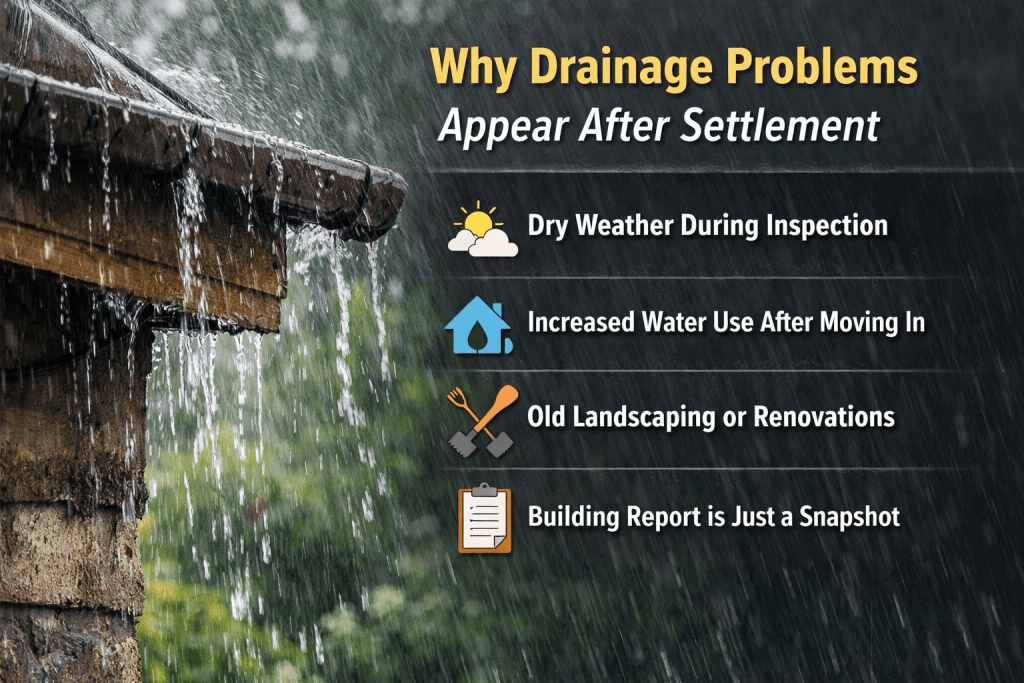
Why Drainage Problems Appear After Settlement
It’s easy to assume that if a building passes inspection, it must be in the clear. But drainage is a different beast — and its problems often don’t show up until weeks or even months later.
Why? Because drainage performance isn’t static. It’s time- and condition-dependent, meaning it only reveals itself under the right (or wrong) circumstances. Here’s what causes that gap between inspection day and discovery:
1. The Weather Wasn’t Bad — Yet
If it hadn’t rained heavily for weeks before your inspection, any stormwater issues lurking underground wouldn’t have been triggered. Building inspectors don’t test the system under stress — so even severely blocked or undersized pipes might seem “fine” at the time.
2. Increased Occupancy Changes System Stress
Many properties sit empty or lightly occupied prior to sale. Once a full household moves in, water usage increases dramatically — showers, washing machines, irrigation. That change can expose hidden flaws like:
- Slow-draining systems
- Overflows at the lowest point
- Surcharge points in backyard gullies
3. Landscaping or Renovation History
Sometimes, earlier renovations or landscaping projects alter natural water flow. Raised garden beds, paved patios, or DIY retaining walls may look great, but they can redirect water toward the home or block existing stormwater paths. These alterations often go unreported and uninspected.
4. Building Reports Are Time-Specific Snapshots
Even the best building reports are a snapshot in time — a non-invasive, visual overview. They don’t simulate real-world scenarios like a 50mm downpour or two kids showering while the washing machine runs. That’s why drainage issues can feel like they come out of nowhere — but they were always there.
What Building Inspections Do (and Don’t) Cover
Building inspections are essential — no question. They help buyers assess structural integrity, visible defects, and pest activity. But when it comes to stormwater and subsurface drainage, there’s a critical blind spot.
Here’s what standard building inspections include:
- Visual checks of roof lines, gutters, and surface grading
- Notes on obvious signs of water damage or pooling
- Inspection of dampness in accessible areas (walls, floors)
And here’s what they don’t:
- They don’t test drain capacity
- They don’t trace stormwater pipework underground
- They don’t use tools like cameras, locators, or flow testing equipment
- They don’t inspect how a system responds under real conditions
This isn’t a fault of the inspector — it’s simply outside their scope. Building inspections are non-invasive and visual by design. They’re not equipped to evaluate how your drains, downpipes, or stormwater system will perform under pressure.
Without a dedicated drainage inspection, serious issues like partially collapsed pipes, illegal stormwater connections, or undersized soakage pits can go completely undetected.
Case Examples: Common Drainage Risks Missed in Standard Inspections
Not every drainage issue is dramatic. Some lurk quietly until just the right conditions — then fail hard. Below are real-world examples of problems routinely missed during standard building inspections that later cost buyers thousands.
1. Sloping Blocks with No Subsurface Drainage
A home built on a gentle slope may look perfectly normal on inspection day. But without adequate subsoil drainage, rainwater builds up behind retaining walls or foundations, leading to:
- Surface ponding
- Sub-floor moisture
- Structural movement over time
Building inspectors may note the slope, but they don’t dig or test below ground — so the underlying water pressure often goes unchecked.
2. Blocked or Partially Collapsed Stormwater Pipes
Tree roots, broken PVC joints, or legacy clay pipes are common culprits. These issues don’t always present obvious symptoms until water flow is high. Visual inspection can’t detect these — but a simple CCTV drain camera would.
3. Incorrect Grading or Backyard Water Traps
Some properties have subtle grading issues where the backyard or side paths slope toward the house rather than away. In dry weather, no problem. After a storm? Water runs straight to the footings. Unless water is visibly pooling, this can go unnoticed.
4. DIY or Unauthorised Stormwater Work
It’s not uncommon for previous owners to add patios or garden beds that block old stormwater outlets — or worse, reroute them illegally. These changes are often buried, and without council documentation or specialist tools, standard inspections don’t catch them.
5. Misleading Visual Signs
A home may have new turf, fresh gravel, or newly cleaned gutters. These cosmetic touches can mask drainage problems that reappear weeks later. Visual-only inspections are no match for performance-based testing.
Each of these issues is solvable — but not if you find out after settlement. That’s where dedicated drainage inspections make all the difference.
How a Drainage Inspection Adds Clarity
A drainage inspection goes beyond the surface. It’s designed to uncover the plumbing and stormwater risks that building and pest reports simply aren’t equipped to detect. Here’s what sets it apart — and why it’s worth every cent in the property buying process.
1. Functional Testing Under Real Conditions
Unlike building inspections, which are passive and visual, drainage inspections actively test system behaviour. This might include:
- Running water through downpipes
- Checking gully traps and overflow points
- Simulating typical use scenarios (e.g. heavy rain + appliance use)
This helps identify slow-draining areas, surcharge points, or water flow reversal that wouldn’t otherwise be visible.
2. CCTV Drain Camera Assessment
We use advanced camera equipment to inspect inside stormwater pipes. This reveals:
- Root intrusion
- Collapsed or cracked pipework
- Misaligned joins or illegal connections
- Sediment build-up or blocked pits
Even if the system seems “fine” on the day, this technology shows what’s actually happening below ground.
3. Surface Grading and Flow Assessment
We assess whether water flows toward or away from the home. That includes garden beds, driveways, retaining walls, and hard surfaces. Poor grading is a leading cause of long-term dampness and structural issues — and it’s easily overlooked.
4. Independent, Evidence-Based Reporting
As independent plumbing consultants, our inspections are not linked to repair sales. Our only job is to uncover risk — and give you a clear, factual report backed by images, video footage, and plain-English explanations.
This clarity helps you:
- Avoid unexpected post-settlement costs
- Renegotiate purchase price (if needed)
- Buy with confidence, knowing the full picture
When Should You Get a Drainage Inspection?
Not every property needs a specialist drainage inspection — but many do. The key is knowing which red flags signal hidden water risks that standard building inspections will likely miss.
If the property you’re looking at has any of the following features, a dedicated drainage assessment is strongly recommended:
🏡 Older Homes (20+ Years)
Older properties are more likely to have:
- Legacy clay or earthenware pipes
- Unmapped or undocumented stormwater systems
- Settled soil affecting drainage slope
Over time, even functional systems degrade — often just enough to pass visually, but not enough to perform under stress.
🔨 Renovated or Landscaped Homes
Properties that have been renovated — especially where outdoor areas have changed — often have:
- Blocked or covered stormwater outlets
- Surface water redirected toward the house
- Illegal or DIY drainage work
If there’s no council paperwork or visible outlet points, risk is high.
⛰️ Sloping Blocks or Uneven Terrain
Homes built on a slope must have proper subsoil and surface drainage. If they don’t, water builds up around footings or behind walls — and it rarely shows until the next big storm.
🌧️ Flood-Prone or High Rainfall Areas
In areas known for heavy rain or flash flooding, a functioning stormwater system is essential. Even minor issues can result in significant damage.
🏘️ Properties with No Obvious Stormwater Outlets
If you can’t see where water drains to — it probably doesn’t drain well. Missing or undersized pits, buried drains, or disconnected downpipes are common and dangerous.
If you’re seeing any of these signs, it’s not about being cautious — it’s about being smart. Drainage failures are expensive, stressful, and preventable.
Drainage Problems Are Invisible — Until They Aren’t
When you’re buying a property, what you see isn’t always what you get. Drainage systems are mostly hidden — buried underground, out of sight, and often overlooked in the rush to settle.
A building inspection gives you a critical overview of structural and pest-related issues, but it’s not built to test performance under pressure. And that’s exactly when drainage systems fail: when it rains, when you move in, when it’s too late.
Whether it’s a sloping block, an older home, or just a property with no clear stormwater plan — a dedicated drainage inspection fills in the gaps. It gives you the real story behind the pipes, pits, and performance of the systems that protect your biggest asset.
For buyers wanting peace of mind about subsurface and stormwater risks, we offer independent drainage inspections across Brisbane, SEQ, and Northern NSW.
📍 Explore our Stormwater & Drainage Inspection Services →